How to Ask for Referrals Effectively without Pushing or Begging
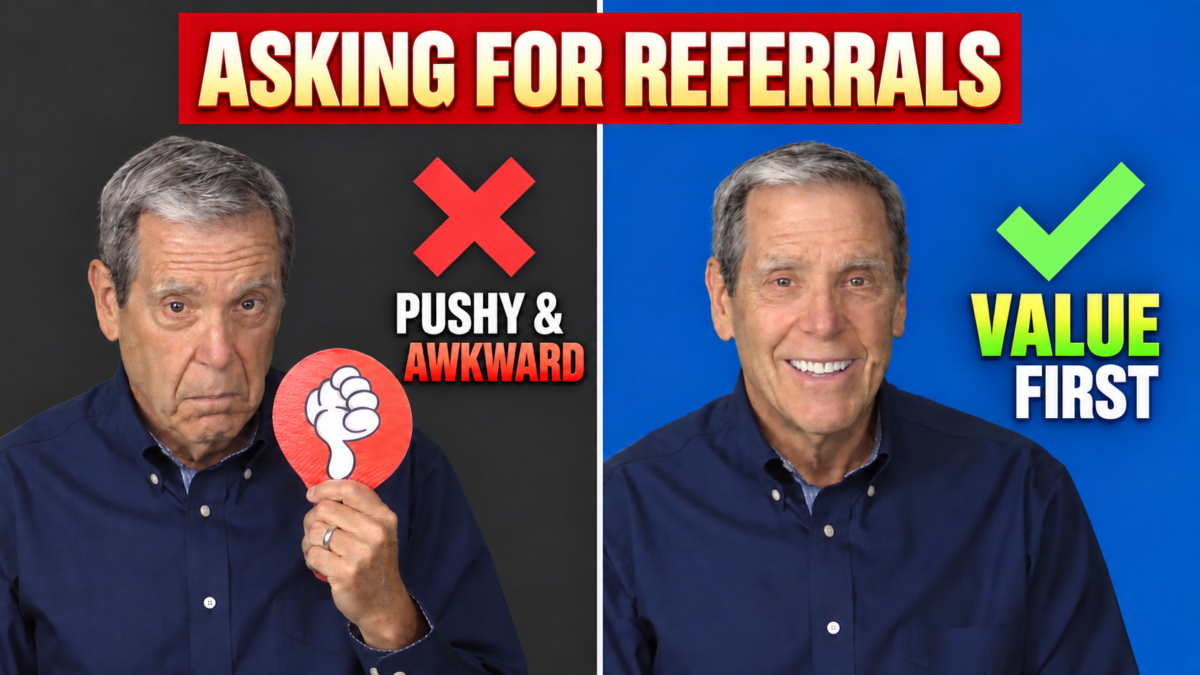
Asking for referrals can feel awkward, especially when you don’t want to look like “That creepy referral guy!”
If asking for referrals feels awkward, the problem may simply be that you’re asking at the wrong time, in the wrong way, or both.
When advisors contact me for coaching, they invariably express three concerns: They don’t want to appear unsuccessful, they don’t want clients to feel pressured, and they don’t like hearing no. I jokingly call these the “three referral Disney characters”: Cheesy, Creepy, and Sleazy.
Avoiding referral conversations altogether usually means you’re missing huge opportunities for growth through multiplying your best clients.
➡️ Read or watch the YouTube video below.
Start with Recognized Value
A referral conversation feels awkward when it’s disconnected from value. Becoming referable requires two things: value has been delivered, and the client recognizes that value.
Many advisors skip the value conversation or assume the client already understands what made the relationship worthwhile. That assumption is risky. Clients don’t refer because you tell them you’re valuable. They refer when they’ve identified the value for themselves.
One natural moment to explore this is when a prospective client decides to work with you. After the decision, you might say:
“George, you’ve made a great decision, if I do say so myself. [smile] And I’m looking forward to the important work we’ll be doing together. I know you were considering a couple of options and certainly had a lot of factors to consider. So, I’m curious: what tipped the scales? What made you decide to move forward with this important work?”
This question does more than invite a compliment. It reinforces the client’s decision, clarifies the value they’re experiencing, and creates a foundation for discussing introductions. As I explain at 02:30 in the video, when clients say the value out loud, they feel more aligned with the process, more confident in their decision, and more comfortable introducing you to others.
Without that step, asking for introductions can feel premature.
Ask for Permission to Explore
Once the client has recognized the value, don’t jump straight to, “Who do you know?” Instead, ask permission to brainstorm possible introductions.
The request should be specific and low-pressure. For example:
“George, you mentioned earlier how important proactive planning has been for you. I know your sister and brother-in-law are in the area. Assuming we can come up with an approach that feels comfortable for everyone, would you be open to exploring how you might introduce me to them?”
This wording works because it leaves room for a conversation rather than pressuring an outcome. It doesn’t assume the client will agree, and it doesn’t rush them into making an introduction. It creates a series of small steps, or “easy yeses,” beginning with permission to explore.
You’re not asking the client to immediately contact someone. You’re asking whether they’d be open to considering an approach that feels comfortable for everyone.
Replace Vague Requests with Useful Direction
Broad questions usually produce weak results. “Can you think of anyone you know who could benefit from this work?” is too vague. The client has to search through every person they know, determine who might be relevant, and figure out what you mean by “benefit.” It usually fizzles.
A better approach is to arrive with a place to start. That might be one or two specific people the client has already mentioned, or a few relevant categories connected to money in motion or life events.
Specificity gives the conversation a clear path without turning it into a demand. It also keeps the focus on the people who may benefit from your work, rather than on your need for more business.
Make the Request About Paying the Value Forward
There’s nothing wrong with asking for help, but the request shouldn’t focus on growing your business. The purpose is to bring your value to people who may need it. You’re asking for help to help others.
That shift in your mindset will change the tone of how you ask. You’re not asking a client to do you a favor for your benefit. You’re exploring whether someone they care about should at least be aware of the work you do. As I put in at 04:31, “Your value is worth sharing.”
When value has been delivered, recognized, and connected to a specific person or situation, asking for an introduction becomes a natural extension of the client relationship.
Start Multiplying Your Best Clients with The Cates Academy™

Learn Bill Cates’ Proven Process to Attract More of the Right Prospects
The Cates Academy for Relationship Marketing™ is a comprehensive online video-training program that will help you generate significantly more income in less time. Work smarter, not harder!
Get the details and join us: www.CatesAcademyIndividuals.com