Bill Cates [00:00:02]:
Welcome. Welcome. Have you ever noticed that most clients say they’re satisfied with their advisor, yet some of them still leave or refer very little? In this episode of Top Advisor podcast, we’re going to challenge what you think you know about client satisfaction, loyalty, and what today’s clients truly want from a financial professional. We’ll explore how to create a standout experience, one that deepens relationships, drives referrals, and actually grows your business without spending more money.
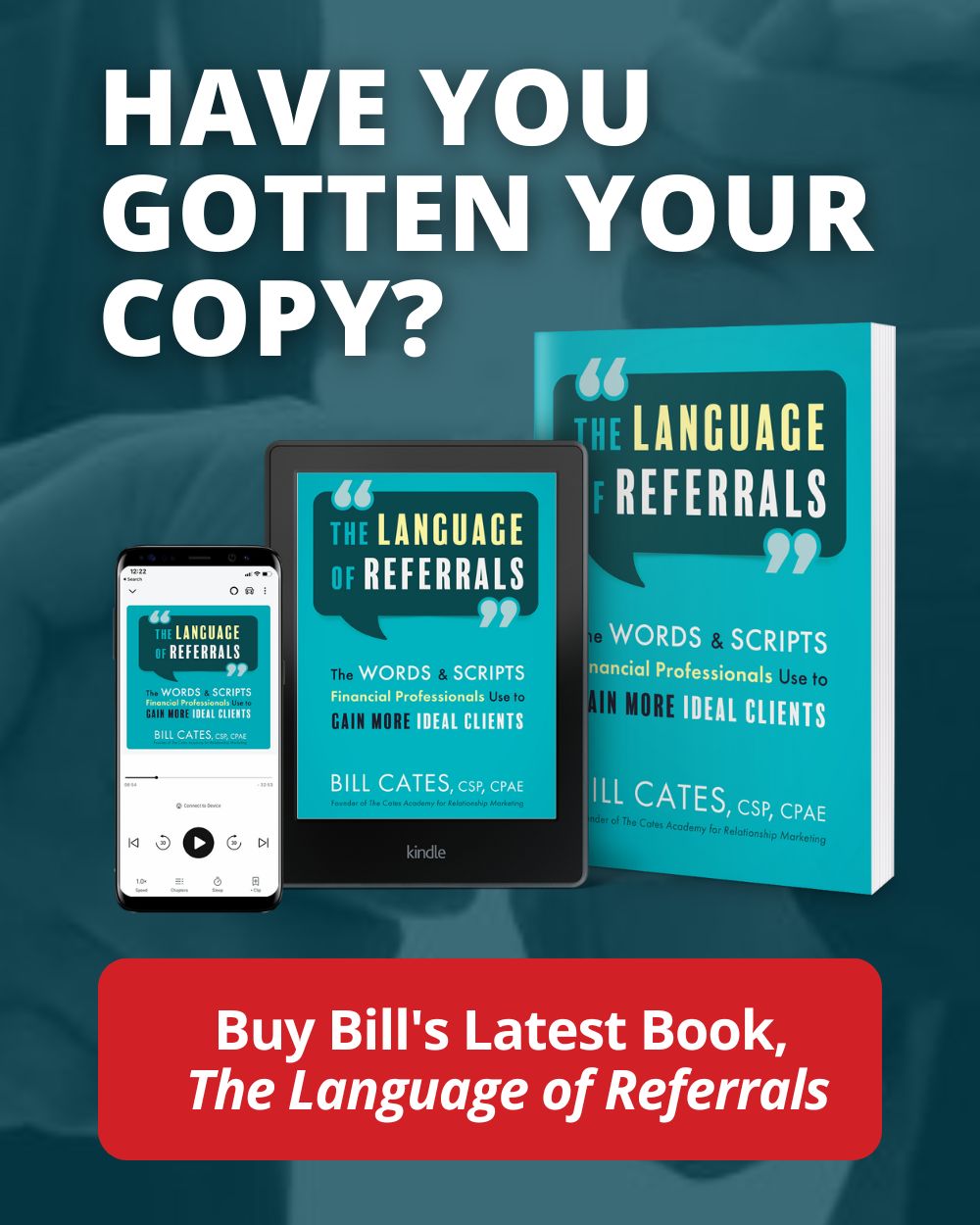
Here’s the kicker. But first, did you know my newest book has just come out? This book is unlike anything I’ve written before. It’s a business parable, authored or co authored, I should say, with Jeff C. West. It’s suspenseful, it’s insightful, surprisingly fun, kind of a twist that nobody expects coming at the end. The title is the Hidden Heist. Stop Robbing Yourself of Lasting wealth, an irresistible tale of financial redemption. And the story is set during a bumbled bank robbery.
So there’s a mix of fun intention and explores the beliefs and assumptions that keep many from building wealth or seeking financial guidance. It shares essential financial lessons, some of the basics, without ever feeling like a textbook book. And you’ll be pleased to know that the book makes a strong case for hiring a financial professional like you. And while the Hidden Heist is especially geared towards adults age 18 to 45, we believe everyone will find the story fascinating and the perspectives helpful. I just got an email from a financial advisor. Read it on a plane, plane ride, loved it. Just bought 75 copies for his clients, so. So it’s really good for just about anyone.
Some advisors actually are using the Hidden Heist with their teams to create a conversation around everyone’s money stories, their story, their team stories, making them healthier, and then bring that empathy to their relationships with their clients. So if you’re curious, just go to thehiddenhiist.com thehiddenhiist.com now on with today’s show.
My guest for today’s show is my colleague and friend, Richard Wileman. Rich and I have known each other for years. We’re both members of the Professional Speakers hall of Fame. We’ve both dedicated a huge chunk of our lives to helping financial professionals acquire more right fit clients and serve those clients better. Now, to say that Richard came from humble beginnings and rose to a very high level of success would be an understatement. Orphaned at age 6, Richard lived in 19 foster homes and attended 11 different schools.
I can’t even imagine that. And rather than becoming a victim of those circumstances, he overcame them and has had a remarkable business success, including, get this, becoming an award winning general sales manager of Rolls Royce to heading sales and marketing for the Robb Report, a magazine for the luxury lifestyle from its very inception until a record liquidity event. I remember reading the Rob Report for many years. Richard is the co, is the author of three international bestsellers, the latest of which 100 Proven Ways to Acquire and Keep Clients for Life. It’s the number one new release in marketing and consumer behavior and number one in consumer relations on Amazon. And of course it is available on Amazon or at your favorite bookstore. And finally, Richard is a Horatio Alger nominee for his philanthropic work on behalf of orphans and widows. So I’d like to welcome Richard Wileman, cpae.
Zooming in from … Richard, I know you have homes in Hawaii and Florida. So where are you today?
Richard Weylman [00:03:54]:
I’m in sunny Florida today. Bill. Nice to see you. Thanks for having me. I appreciate it. Thank you.
Bill Cates [00:04:00]:
You bet. I just read yesterday that Hawaii is the rainbow capital of the world. So I’m sure you’ll love when you’re in Hawaii as well. Anyway, I’ve heard you say that people are going through, I think you call it great re evaluation. What do you mean by that? And what does this mean for financial advisors?
Richard Weylman [00:04:22]:
Well, what it means is, is people. And the pandemic really pushed this. People began to step back and say, am I, am I doing the right thing? Am I with the right situation? Am I living in the right city? Am I living. I mean all the evaluation we went through and the list is long and, and arduous to work through. But as relates to financial services, people have stepped back and say, okay, am I being taken for granted? Do I hear from my advisor frequently enough. We did some work with Salesforce. 25% of the people out of 6,000 we surveyed said they switched financial advisors within a three year period because of the lack of consistent communication. They felt like they were being taken for granted.
Wow. That’s a big number. That’s 1500 people.
Bill Cates [00:05:05]:
Wow.
Richard Weylman [00:05:06]:
So what people are doing from the financial services perspective is they’re asking themselves, is this advisor really the right person for me? And the way they’re evaluating that is no longer on products and services. It’s really no longer on service. I mean this whole messaging that the industry has tried to, shall we say, maximize is. Is this idea, we give good service today, that’s such a minimum expectation. It’s laughable and you know, I’m in the US Institute luxury board. We support 100 luxury brands as well there. And I can tell you that good service is minimum expectation. What people really want is a great experience on the buying side and on the service side, etc.
You know, I think difference, and they’re evaluating that. Thank you.
Bill Cates [00:05:59]:
Yeah, I’m sorry to interrupt. Whenever I do my presentations. Did one last week in Green Bay, Wisconsin. I said show of hands. How many of you use the fact that you provide great service to your clients as something that. As a differentiator that distinguishes you from your competition. And about 80% of the hands went up. So obviously now it doesn’t mean you don’t talk about it.
Right. I think you should talk about providing great service. But it’s not a distinguisher. It’s not a differentiator anymore.
Richard Weylman [00:06:34]:
Right. Well, since Supernova came out, Rob Knapp, who’s passed away, but since Supernova came out, I mean, anybody that’s not thinking about having a. Let’s call it a schedule of service or at least a service plan that one could present to your clients. You might have an A and a B. We can contact you 12 times a year, 4 of which are quarterly reviews, 2 of which are face to face or 6, 2, 1 something to present to them instead of saying, I give good service, we’ll be in touch regularly, etc. The top teams. And as you know, I coach a lot of large, large teams and like you do. And the reality is that the big teams, the better advisors, they have structured communication plans that they present on behalf of the client and the prospect.
And what that prospect immediately sees is this person is not trying to be different. They’re distinct from everybody else. They put it in writing. They actually have a process that I can rely on that they’re going to communicate with me on an ongoing basis. And so that. What does that do that elevates the experience that they have? I just finished some research with PwC and we found out that not a huge, not a huge number. It was a thousand people, but 812 of them said that it’s at least 50% of the value they place with their financial advisor is the experience they have with him for her or the team. So it’s half the value.
Let’s just call it half for most people.
Bill Cates [00:07:59]:
Yeah. It’s not just the numbers, not just the performance, it’s the overall experience.
Richard Weylman [00:08:03]:
Right?
Bill Cates [00:08:04]:
Yeah. So I’ve. The listeners of this show know that my, my favorite topic always centers around client acquisition. You know, a classic book that I’ve probably read several times was your book was Opening. Opening Closed Doors.
Richard Weylman [00:08:24]:
Opening Closed Doors in my first one. Yeah.
Bill Cates [00:08:26]:
Yeah, it’s great. Great book. Classic in the industry, as far as I’m concerned. So talk to us a little bit about. What do you see are the. The key. The main key or keys to acquiring and retaining clients. I guess you’ve touched on it around experience.
Is there more to. More to say about that?
Richard Weylman [00:08:46]:
Yeah, yeah. And experience is an easy word. Well, you need to give them a better experience. Well, right. Thank you. Let me make a note of that. And then you go home and say, I wonder what that means. It’s like I was at a conference recently and it’s.
Richard Weylman [00:08:57]:
I mean, not. Not disparaging, but listened. The individual that was on in the morning, I went down there, just kind of get, you know, you like how you do. I try to weave. And I was on. I was closing keynote and. But he talked for 45 minutes on Focus. But I went in the hall later and afterwards and people were standing.
Richard Weylman [00:09:16]:
It was really good. But, you know, it wasn’t really clear what they were supposed to focus on. And there. And therein lies the point of experience, you know, so let’s talk reality. Let’s talk about tactical.
Bill Cates [00:09:28]:
Yeah.
Richard Weylman [00:09:28]:
All right, number one, do you have. Their name is David Dave or Dave is Dr. John Wilson? Does he like Dr. Wilson or John? Okay. Is Elizabeth, Liz, Betty or Beth, or do you know or you don’t know? Okay. T. Boone Pickens was a friend of mine. He never went by T.
My first initial is C, as you know. C. Richard, I get lots of emails. Dear C. I don’t open those as an illustration. All right. Another thing. Do you sign your emails? How do you send your emails? You sign them best.
That’s the number one dislike by the affluent people. The number one dislike they. An affluent. I can’t even say. I can, but I won’t say some of the words they told my interns. And we in our research, you know, I have a research division, as you know, and some of the words that these women will say. Why would they ever say best for what best are they? So let’s not use best. They don’t like Sincerely Yours.
They think it’s institutional. Warm regards, kind regards. Best regards was the third. But warm regards, I mean, these are little things, but they’re important in the psychology of them. Another thing is that fundamentally what they’re really looking for when you talk about experience are four things they’re looking for. Kindness, thoughtfulness, caring, and empathy. Those are the four things they look for.
Bill Cates [00:10:47]:
Give this again.
Richard Weylman [00:10:48]:
Kindness that you somehow demonstrate, kind of. You know, I’ve written 100 proven ways and throughout the entire book, which is very tactical, as you know. Bill, you’ve read it. Yes, all kinds of ways to be kind, but kindness, thoughtfulness. They want you to be thoughtful. Give you a quick illustration. Young gal that four years in the business, she has a client, elderly client. They were supposed to come in to sign paperwork for an annuity.
They couldn’t. They called and said their dog broke its leg. We’re not gonna be able to come. Okay, well, fine. She could say, I’ll send you the paperwork. She said, I’ll be right over. But she didn’t just go right over. She stopped at Petco, bought a tin of cookies for the dog and a get well card.
Took it to the dog and the household. They signed it. Everybody goes, oh, that was nice. But what was really nice is a week later that she got a call from their son who’s a neurosurgeon on the West Coast. He said, I want to thank you for taking care of my. My mom and my dad. We’ve been trying to get them to move out here. They don’t want to.
They live in Missouri. They want it. They’re very conservative. They want to stay there. And they said. She said, I just want to thank you. You really took care of them. And.
And I. I’m just so grateful. They. All he could talk about is how you took care of them and the dog and how thoughtful you were. He said, listen, I have five partners here in our neurosurgeon. We’re a private practice, and we’re with. I won’t mention the name of the hair here, but we’re with a major investment house, and we’re pretty unhappy because we. We really don’t feel like we’re getting our money’s worth.
Do you know anything about investments? She said, well, I have a partner who’s licensed there, and I’m licensed there. He said, it’s not big. He said, we got $45 million in our 401k account, but would you be willing to look at that? And our seps got 30 million in it. Would you look at. Would you be willing to at least look at that? Maybe we’d move everything. Anyway, long story short, three and a half weeks later, they got $75 million for a tin of cookies. I mean, let’s. Let’s be clear here what the trigger was, okay? The Trigger was kindness, thoughtfulness, caring.
She demonstrated that. Also show people that you care. It’s like when you’re going put your shopping cart away. That’s a way to demonstrate your care. I mean, it’s that mindset. It’s holding the door for the guy or the gal behind you or coming in with you. And then the last one is empathy. And empathy is the hardest one to demonstrate because either you are, you’re not.
Now I’ll get. May I give you an illustration of how to be empathetic real quick?
Bill Cates [00:13:14]:
Yeah. It’s one of the biggest words that I talk about all the time. So go for it.
Yeah. Empathy is a problem for most and it really was a problem for me because I understand it and you understand it, but it’s very, very hard to illustrate it for someone. I mean, you can give them a story and as well, a nice story. Thank you very much. But I’m thinking. But we ask really sensitive questions in the financial community. I mean, we have some tough questions like, how long have you been married? How much money do you have? What are you planning on getting divorced? I mean, there’s a lot of stuff here.
Bill Cates [00:13:43]:
When are you planning on getting.
Richard Weylman [00:13:44]:
Yeah, so I mean, you know, how many wives? I mean, you know, all these conversations. So that’s funny. I woke up in the middle of the night. I was home in Honolulu and I set up in the middle of the night and I shouted, it’s the predicate. And woke my wife up. She was like, honey, predator. Is there a predator? And of course, Rolex, my wonder dog. He woke up, he thought I said, predator.
So he’s at the door barking, daddy, get the nine millimeter. Let’s go get him. And I said, no, it’s the predicate. The predicate’s in the wrong place. And she said, you, you’ve got honey, you really got to start writing this. This. I mean, this is twice a week now. You’re waking up shouting something at night.
But it’s the predicate was the problem. Because here’s what we say. Bill, if you don’t mind me asking, how much money are you planning on investing with us? Bill, if you don’t mind me asking, how long, how long? How long before you think you’re going to retire? If you don’t mind me asking, what are you unhappy about with your current advisor? If you don’t, we all go with the. If you don’t mind me asking. And I focus group this right after this and I ask people if I. I’m going to Ask you a question. I’m going to say this, if you don’t mind me asking. I’m going to give you two different ways.
So I would say, okay, I’m going to ask a question. Now. I started. Push the left button if it’s rude. Right button if it’s empathetic. Everybody got it? Got it. Great. 20 people in the room, if you don’t mind me asking.
And they push rude. I said, no, no, folks, you need to let me finish the question. I said, you ready? Everybody ready? Everybody got it? Now I’m going to ask the question, and then you press the button. Okay, everybody got it? Here we go. If you don’t mind me asking. Yep. I’m like, okay, folks, one more time. You.
I have to finish. And they said, there’s no reason to finish the question. It’s rude. And it hit me like a bat. The predicate’s in the wrong place. Say it this way, Bill, how much money are you planning on investing with us, if you don’t mind me asking? And what it does it gives people. So I talked to my psychology buddy, and, you know, I do a lot of business with a lot of research through Harvard Business Review, and he said, it’s the psychological break that people need. It gives them this psychological space to consider your empathy.
Richard Weylman [00:15:55]:
Got it.
Bill Cates [00:15:56]:
So by putting.
Richard Weylman [00:15:57]:
I’ve gotten hundreds of emails from advisors who have read the book, and they’re just stunned at how open people become when you just flip the predicate. Is that helpful?
Bill Cates [00:16:07]:
Yeah. Is it? So is putting the empathetic statement on the back end. It’s kind of like. Like the punchline of a joke, I guess, in a sense that you want to end with the right word. The right words. Is that. Is Right.
Richard Weylman [00:16:20]:
Is that.
Bill Cates [00:16:21]:
That where I’m headed with that?
Richard Weylman [00:16:22]:
And that little bit of a pause, right. Gets them to realize that you’re trying to frame it in a way that’s empathetic, but by saying, you know, how much money are you planning investing, if you don’t mind me asking, Bill.
Bill Cates [00:16:36]:
Right.
Richard Weylman [00:16:37]:
And I mean, I’ve had people, I have a group of Pittsburgh, they said, we actually practice that as a sales meeting. How to put. And it was like crazy. They would go out and ask questions. What have I not explained to you properly? If. If you don’t mind me asking. And they close more business.
Bill Cates [00:16:56]:
And that’s what I love about your book, 100 Proven Ways to Acquire and Keep Clients for Life. It is very tactical. It’s strategic and tactical. And we know that people, you And I have seen this for years, right? People said, tell me what to say, tell me how to say it, and I’ll do it. I just. I get the concept, but I need the words. And that’s. That’s one of the things you do.
Bill Cates [00:17:15]:
You’re extremely.
Richard Weylman [00:17:16]:
And those are the four things you’re looking for. Kindness, thoughtfulness, caring, and empathy. But, you know, another thing, like when you meet with somebody, say, okay, well, thanks very much. Thanks for ask this question. What else can we do for you today? That’s another way to elevate the experience at least twice a year. Advisors listening to this broadcast, I would encourage you to say to your clients, what are three things we can do to elevate your experience further with our team? They might say, well, there’s really nothing. Well, you know, I’ll tell you one thing. And here it comes.
Richard Weylman [00:17:44]:
I’ve got a guy up in Pennsylvania, eastern Pennsylvania, and started asking the question. And sure enough, this widow said, well, I hate coming out here in the wintertime in the snow. So he’s got a client that owns a limo service. So what do you think happened next? They all get limoed in and out, and guess what? He’s picked up another $40 million worth of business through word of mouth. Because today, people share, good and bad. It used to be if I had a bad experience, Bill, I’d call you and complain because you’re the boss. But now I go online and say, we need to boycott the business and if anybody’s got a cocktail, burn the building down. I mean, that’s just how people are wired today.
Richard Weylman [00:18:24]:
So it’s crazy. And another thing, to help elevate the experience, stop asking people how you know when you come on the line. Like today when you and I came together, I didn’t say, how you doing? I just said, hey, Bill, good to see you. And you said, yep, been busy. Had my daughter’s wedding. I said, how was the wedding? All right, now think about this from a client perspective. The next time you talk to a client, don’t start off with how are you? Or even a prospect you’re talking to. Maybe two months or three months later, when Bill comes on, I’m going to say, hey, Bill, good to see you.
Richard Weylman [00:18:58]:
What are you most excited about in the next six months? Or what are you excited about this fall? Or what are you excited about for the holiday season? I want to get them to tell me their story. Why? Because it builds an emotional connection. And if I get the four E’s, going emotional, connect, elevated experience, emotional Connection. It’s amazing what happens when you elevate the experience. You get emotional engagement and people stay with you. So these things all matter in the sense of the way you build relationships because relationships build revenue. That’s it. We’re in the middle of a relationship revolution right now.
Bill Cates [00:19:33]:
Yeah.
Richard Weylman [00:19:33]:
You. Yeah, I’m writing an article for Forbes right now on the. On the relationship revolution because we live in an experienced economy.
Bill Cates [00:19:41]:
Something I. I picked up years ago, I think it was. You remember Lou Heckler?
Richard Weylman [00:19:46]:
Yeah.
Bill Cates [00:19:46]:
Colleague at National Speakers Association. He says our business grows at the speed of relationships. Yeah, I just. I love that. And I don’t think we’ve covered this. I got a question prepared. I don’t think we’ve hit it yet, so let me. If I.
Bill Cates [00:19:59]:
If we have, just let me know. You, you, you. I want to talk about the difference between clients saying they are satisfied with their advisor but not fine with the experience. That distinction, right?
Richard Weylman [00:20:17]:
Yes. Wonderful distinction you’re making.
Bill Cates [00:20:20]:
Talk about that.
Richard Weylman [00:20:20]:
Yeah. Often people will be satisfied with the product or service. They’re satisfied, but they don’t feel like it’s a personalized, humanized relationship they have. So it’s not. It’s good. And I mean, we. I won’t get in, but I mean, we. We’ve had a massive year with the people we’ve coached.
Richard Weylman [00:20:40]:
We’ve taken out over a billion dollars. Our teams that we’re coaching in new business this year. And I keep telling them, remember, they might be satisfied with the way the phone is answered and the service that they’re getting from the staff. They might even be satisfied with their returns, but they’re not really delighted advocates because they have no real relationship. There’s. And I said, we just remember this, that people. People really become advocates for the experience they have. They don’t become advocates for the stuff they bought.
Richard Weylman [00:21:14]:
And that’s how people think today. People today, it’s all about the personal relationship they have with them. That’s when I said, we’re in the middle of a relationship revolution. So I might be satisfied, Bill, that you sold me a wonderful something that increased in value or protected my family or whatever the case may be. And I’m grateful you put together a great plan. That’s good. I’m really satisfied with this service. But if I had to rate the experience, I mean, it’s good.
Richard Weylman [00:21:45]:
I mean, I have to call you most of the time. I mean, you do reach out to me occasionally, but it’s usually just to tell me there’s something I ought to buy. Or do. And I don’t hear from you often enough. And I mean, I, I would say that, you know, you’re a good advisor. Would I say that I’m a delighted advocate? No, I don’t, I don’t know that I could use that phrase.
Bill Cates [00:22:12]:
Right.
Richard Weylman [00:22:12]:
And I’ve done a lot as you know, we do a ton of branding interviews and we hear that we’ll have somebody give us your top 10 clients. We do branding interviews and these are top 10 clients for a firm, for an advisor. And we’ll have some of those top 10 relationships say, yeah, I wouldn’t say I’m delighted. And yet the advisor thinks they are.
Bill Cates [00:22:35]:
So do you recommend that advisors or members of their team actually get into this? You know, I mean, it’s one thing to do a, an anonymous survey or survey with email through the mail. It’s another is to have, I call this a value discussion. You probably have your own version of this. I mean, at some point you want to sit in front of this client or zoom if you have to and say, let’s, let’s talk about this. Right? Let’s, let’s, you know, are we providing you with an experience worth sharing? Maybe you don’t use those words, but talk about that. What does that conversation sound like?
Richard Weylman [00:23:07]:
Yeah, it’s exactly. We have, you’re right. We have a proprietary process we use and you know, I’ve got my, the other division of my company, the branding division. In fact, we’ve got two right now we’re doing. And we have them go out and we have the advisor actually interview his or her top clients. Depends on the size of the team. We’ve got a team Now. It’s got 2.5 billion.
Richard Weylman [00:23:27]:
They’re interviewing 22 clients. Then that all gets can put into a report. But the questions we ask is how would you characterize our service? And we give them multiple choice just to get them in the flow, you know, good we have anywhere delighted, satisfied, etc. And then as we get a little deeper in how familiar are with the products and services we offer, we give them a list. I can tell you that the average consumer of goods for the advisors listening to this call might know about five or six products or services that an advisory offers and he or she might offer it 15. Huge gap there. And a wonderful gap for guys like you and I that are trying to help somebody take the business away. You know, just remember your best client is our best prospect.
Richard Weylman [00:24:14]:
So let’s, let’s not be confused how this works here, all right? So your best client is our best prospect. That’s the way we teach teams to think. So go after their best clients because if they’re satisfied, we’re going to get them. And we just took 1.7 billion out of one organization because the guy was satisfied, but he wasn’t delighted. And we were happy about that as soon as he said, well, I’m happy, but I mean, I’m not delighted. That’s for damn sure. Oh. So we ask questions around.
Richard Weylman [00:24:44]:
That. We ask questions around, how would you describe the value we deliver? We ask questions around, if you were going to complete the following sentences, how would you complete them? And then we give them a preface such as, I feel that my team does. I feel my team can improve upon. I feel. And it is amazing if you have a relationship. Now, again, I got to back this up. This isn’t some random, you know, phone room phone call. This is take them out to lunch and have an hour conversation.
Bill Cates [00:25:14]:
Right?
Richard Weylman [00:25:15]:
Not at the end of a review or some other crap you’re there to have a conversation about. We want to improve our business and we’d really like to hear from you. Is that helpful?
Bill Cates [00:25:26]:
Yeah, absolutely. Real quick. I know. I just want to remind people of the book 100 Proven Ways to Acquire and Keep Clients for Life. For someone to reach out to you. What, what’s. What’s the best place for them to go? Website. LinkedIn.
Bill Cates [00:25:42]:
Just give us.
Richard Weylman [00:25:43]:
Sure. Yeah. You can go on LinkedIn, Richard Wyleman, W E Y L M A N Or you can go to my website, Richard Wyleman, W E Y L M A N Dot com. There’s all kinds of resources there for you. Podcasts you can listen to, like, well, Bill does here. Then he can go over a couple. And I post videos all the time. I don’t know how many are up there.
Richard Weylman [00:26:05]:
They’re not. I have a YouTube channel, but these are off YouTube, so you don’t have to listen to the ads and all that crap. You can just go there. I don’t know how many are there, 30 or four. I put them up all the time. I get thoughts and I put them up. And you can subscribe to my performance. Tip.
Richard Weylman [00:26:18]:
If you just scroll down the page, you’ll see it. I got about 60. About 60,000 people to get it and I send it. I’m writing another one today. Before, I was Talking about every 10 days or so, a piece of research that we find out, something I can help you with, and then you can respond back and I’ll answer your questions. Too. So.
Bill Cates [00:26:38]:
So let’s, let’s talk about expectations. This is something I always talk about in my work with advisors and we know that mismatch expectations can damage kill relationships. So speak to that a little bit.
Richard Weylman [00:26:54]:
Well, the sad truth is when you don’t have. And we talked about this at the front end. If you really don’t. Well, let me start off with. Don’t make promises you can’t keep.
Bill Cates [00:27:07]:
Okay. Yep.
Richard Weylman [00:27:08]:
That’s the most important thing. Second most important thing is that the whole expectation of communication. People don’t let. People are really sensitive today about the lack of communication or communication that’s inappropriate.
Bill Cates [00:27:24]:
Okay.
Richard Weylman [00:27:26]:
So if you got a company sending out a newsletter and it’s. Your client base is let’s say whatever. Let’s say somebody in your 50s or somebody in their 60s and you got a lot of people that are retired already and they’re sending out newsletters about how to write a good resume. I’d probably shut that off and wouldn’t have that sent out. I’d do my own. Even if you only did it three times a year, far better you did something simple, a one sheet than them sending crap that nobody’s going to read just pisses people off because it fills up their inbox. That’s. And company hate it when I say that.
Richard Weylman [00:27:56]:
I’ve had, you know, I, I get, I get emails. Richard shouldn’t say that. That’s. That’s a very costly enterprise we have. Well, fine. But it doesn’t work. But we’re happy for.
Bill Cates [00:28:05]:
It’s not relevant. It’s got to be relevant, right?
Richard Weylman [00:28:07]:
It’s not relevant. But keep blowing the cash. We’re happy for you. So anyhow, it’s just how their brain is. But I think that’s the one thing. And the other thing is on expectations is really do have a clear communication plan. People want to know. And when I say communication plan.
Richard Weylman [00:28:23]:
A million dollar household today expects to hear from you a minimum of six times a year. And probably six times a year, two of which are reviews, one of which is face to face. And you should communicate that right up front. Calendar right up front so that you don’t fall down a flight of stairs. And because people leave because they don’t hear from you. And I’ll tell you this, if you’re getting a lot of incoming calls, the reason they’re calling you because you’re not in touch with them enough. That’s the problem and all. And I’m.
Richard Weylman [00:28:51]:
Okay. I’ll say a couple more things here, Bill, that are Important. Stop this whole idea. These firms keep pushing, grow, bring in more business. Bring in more business. You’re growing yourself broke. You’ve got to figure out what it’s costing you to run your practice. We have a whole matrix that we put people through, and they’re stunned.
Richard Weylman [00:29:08]:
I’ve got teams now. We’ve had to raise their minimum to 10 million because the cost to run the business is so high. They got too much. They got a lot of staff, all of which are important. Maybe in some cases too many staff. But what happens is we keep adding staff. We keep adding staff. Keep.
Richard Weylman [00:29:23]:
Well, that drives up overhead. So you’re working harder. And how are the companies doing it? Well, they’re raising the minimums they’re going to pay you on. But that’s not really helpful for you because you keep bringing in assets. And as a result of that, and households. And the households end up needing more and more service. And what ends up happening is the bottom households are the ones that file a complaint against you, and the top households are the ones that leave and cost you the revenue that’s paying your bills. So really set expectations on yourself about what’s going to be your minimum, who’s going to be your client.
Richard Weylman [00:29:56]:
Have the ideal client mapped out in your business, everybody aware of it, and move forward. If you get. I look at it this way, look at your practice as having an airplane with 150 seats on it. And let’s. I’m just going to give you an illustration. And you want every seat to be filled with all your A clients. Then you got about maybe 40 ground crew. Those are family members.
Richard Weylman [00:30:17]:
The rest of the people. Build a second relationship somewhere and insert them into someone else’s practice and do a split number if you can, because otherwise you’re going to grow your. I mean, I’ve got. So I get so many companies that call me. These guys are growing like crazy, but they’re running out of money. They keep in staff. They’re dissatisfied. Yeah.
Richard Weylman [00:30:35]:
And then we look at the numbers and then. No kidding, okay. You’re giving the guy, you know, $8,000 worth of service and he’s paying you $4,000. No wonder you’re going broke. So these are important topics. Is that helpful? Bill?
Bill Cates [00:30:49]:
Yeah. What do you think about the idea of segmentation so that. I mean, for instance, I was working with one advisor a while ago, and she was trying to give everybody the same high level of service, even though there were different levels in terms of what they needed and profitability, et cetera. So, I mean, you kind of described the Rob Knapp supernova model in the sense of let someone else serve them. But is it possible? Have you seen groups that will segment and then, you know, different clients will get a different level of service?
Richard Weylman [00:31:26]:
What we do, you know, in our coaching is we have. We have you segment A, because I’ll make it simple ABC. Hopefully no Ds, but there’s always Ds. Okay. And. And those are households. Okay. Then we decide how often are we going to be in contact with them.
Richard Weylman [00:31:42]:
Obviously, the A’s more frequently than the B’s. Less frequently. By the time you get down to D’s, it may be essentially once a year, if that. It just depends on the business and. And what type of business you’re in, let’s put it that way. But absolutely. You can’t run a business treating everybody the same. You’ve got to segment the business based on the revenue you’re getting in and the services that you provide.
Richard Weylman [00:32:04]:
And that’s one of the areas we spend a lot of time on with teams. And the nice thing is it’s freeing because then you can start making much better strategic decisions and you start bringing in, shall we say, clients with that have larger financial needs, larger assets. You’re getting paid more. You’re getting rewarded for your behavior. And this is how we get this exponential growth that these teams are getting, because they’re. They can focus on the A client and they have a structure for the Bs and the Cs and hopefully no Ds, but some Ds and that are not sucking up their time.
Bill Cates [00:32:42]:
Right.
Richard Weylman [00:32:42]:
You treat everybody the same. Look, time’s your greatest currency in this business. So you’re going to run out of it when you do that. So what’s next?
Bill Cates [00:32:51]:
Well, time and resources. She had more staff than she needed because she was trying to serve everybody at the same level. And it just. It just makes sense.
Richard Weylman [00:32:59]:
I got a team right now. We’re at 19 billion. I just finished their plan to 30. We’re getting the whole thing done with 17 people.
Bill Cates [00:33:05]:
Right.
Richard Weylman [00:33:06]:
I mean, it’s. I mean, printing money. I mean, the assistants are all making over a quarter. I mean, it’s just because we got it structured that the right people are talking to the right people at the right time about the right things for the right reasons. And the two rainmakers are out there just bringing in money.
Bill Cates [00:33:25]:
There you go. So at the top of the show, we. I kind of teased ways to connect and grow without that. That won’t cost you more money. As One of your promises you’ve already touched on a bunch of that part of it’s just attitude and little actions. As we wind this up any any other two or three tips of things.
Richard Weylman [00:33:49]:
That advisors special days give you an example right down not far from my house here in Sarasota is a police station. Okay Next door is a place called five O Donuts. Very smart.
Bill Cates [00:34:00]:
That is smart right?
Richard Weylman [00:34:02]:
And their, their tagline is arrestingly good donuts. Now I bought my first is there 08-04-2019. Now the reason I know that because every August 4th I get a text from them. It says congratulations squad member. Another year of loyal service to the community. $5 off your next bunch of donuts not dozen bunch of donuts. Now they open at 5:30 and you can’t if you’re not there by 7:30 forget it. They, they usually close by 7:30.
Richard Weylman [00:34:34]:
They just they the line every morning seven days a week. Now it’s not just cops. I’ve had people fly in from out of town because they read this story or I told it and they went and I got a guy in San Diego, in fact I talked to him a few weeks ago and he said cut 5o donuts. Every year I get a text from them and I’m in San Diego, California. They stay in touch with me. So let me ask you a question. If I do an investment with you Mr. Or Mrs.
Richard Weylman [00:34:57]:
Advisor are you sending me a congratulations another successful year. As your advisor note on that anniversary to remind me of that which it is you do it on my behalf. Are you sending me a birthday cards? We’re happy for you but how about if the kid makes the honor roll? How about a professional day? I don’t know what today is. Today’s Columbus Day. Indigenous people, all these different titles they throw out today but every day you got registered Nurses day, Grandparents day, Doctors Day. So find out what these people do, who they are and send them a congratulatory note. Another thing you can do is when somebody gives you a referral or a warm introduction or maybe instead of sending congratulations another successful year beer in business I have a team I’m coaching in their first year. I said the first year you sent them a cake to the house.
Richard Weylman [00:35:42]:
And I said they said we’re sending a cake to the house. I said why are you sending a cake to the house? They said well because we want to salute them. I said don’t do that. Send a cake to the office.
Bill Cates [00:35:54]:
Why?
Richard Weylman [00:35:55]:
I said because it’ll end up in the break room and everybody’s going to be asking about.
Bill Cates [00:35:58]:
Yep.
Richard Weylman [00:35:59]:
The cake. And sure enough, they did. And guess what? This woman comes in. What’s the cake for? Is it your birthday? No. Our financial advisor sent to us as on our anniversary of an investment. She said, you know, my husband died seven months ago. I’m really struggling here. Should I.
Richard Weylman [00:36:14]:
He dialed it and handed the phone, said, talk to Misty. He said, she gets on the phone. $1.2 million. Thank you very much.
Bill Cates [00:36:21]:
Yeah. Yeah. If those little things really do mean a lot. And it goes back to that. Kindness, thoughtfulness, caring and empathy. Right.
Richard Weylman [00:36:29]:
It’s being kind and thoughtful.
Bill Cates [00:36:31]:
That’s a mindset that doesn’t cost you anything to adopt. You may have to work on it if you weren’t born into a mindset like that. But, yeah. So my.
Richard Weylman [00:36:42]:
One of the reasons I wrote the book, because, you know, in all of the work that I’ve had the privilege of doing and all the wonderful people over the years, I. I would ask them, how would someone demonstrate kindness? I would. And so they. And I started writing them down. And so there’s a hundred of them there. And. And what’s amazing is the way people respond. You’re so thoughtful.
Richard Weylman [00:37:01]:
You’re so. And they tell their friends, yeah. So I mean, I’ve got a team right now that we’re working. I mean, they just had a union boss call them. He’s got $400 million. He wants to move the whole thing to them. Number one reason, because my friend Jerry told me how kind and thoughtful you were when his wife got cancer.
Bill Cates [00:37:21]:
Yeah.
Richard Weylman [00:37:22]:
They sent him a. Sent them a $39 blanket.
Bill Cates [00:37:27]:
That human connection is. I. Richard, I remember this was years ago. I was doing a presentation for a large company we won’t name kind of newer folks. And I was talking about similar things, about building the relationship, the business, friendship, this or all this. And one of the young guys in the back says, what’s all this stuff about relationship? Aren’t we out there just to sell the product? I mean, we need to get people to buy this life insurance. I said, well, no, you don’t have to pay attention to this unless you want to be successful in this business and stay in this business for a long time. Otherwise, no, just go out and sell property.
Richard Weylman [00:38:03]:
It’s like, okay, well, you’re absolutely right, Bill. And transactional. The whole transactional mindset is. Is. It’s not just obsolete and it’s still.
Bill Cates [00:38:15]:
Alive today, unfortunately, I think it’s better than it used to be, but it’s. It’s still alive. Anyway, look, my featured guest on today’s show has been Richard Wileman. Richard’s a great speaker. I have to say that because we’re both members of the speaker hall of fame. So, you know, I just got to put my plug in there. And his newest book is 100 Proven Ways to Acquire and Keep Clients for Life. Richard, thanks a billion for being our featured guest and for all your contribution to our industry.
Bill Cates [00:38:47]:
Appreciate you.
Richard Weylman [00:38:48]:
I appreciate you, Bill. You’re a good friend, and God bless you. And congratulations on the hidden heist. I’m excited about. It’s great read. I’d encourage everybody to put some eyeballs on or at least by the audiobook and listen to it when you’re on that treadmill. And a wonderful gift for your clients, too, because it really gets them to understand how they really waste their fortunes.
Bill Cates [00:39:07]:
Yeah.
Richard Weylman [00:39:07]:
Thank you.
Bill Cates [00:39:08]:
Thank you. With the subtitle is Stop Robbing yourself of Lasting Wealth. So it is the mindset, the hidden Heist. So don’t forget, per Richard’s prompt to go tothe hidden heist.com also a lot of I’d say free but Valuable resources@referralcoach.com resources. Referralcoach.com resources. This is Bill Cates reminding you that ideas do not make you more successful. Only acting on those ideas will bring you the success you desire. Hey, thanks for stopping by.
Bill Cates [00:39:47]:
All right. And we’re clear.